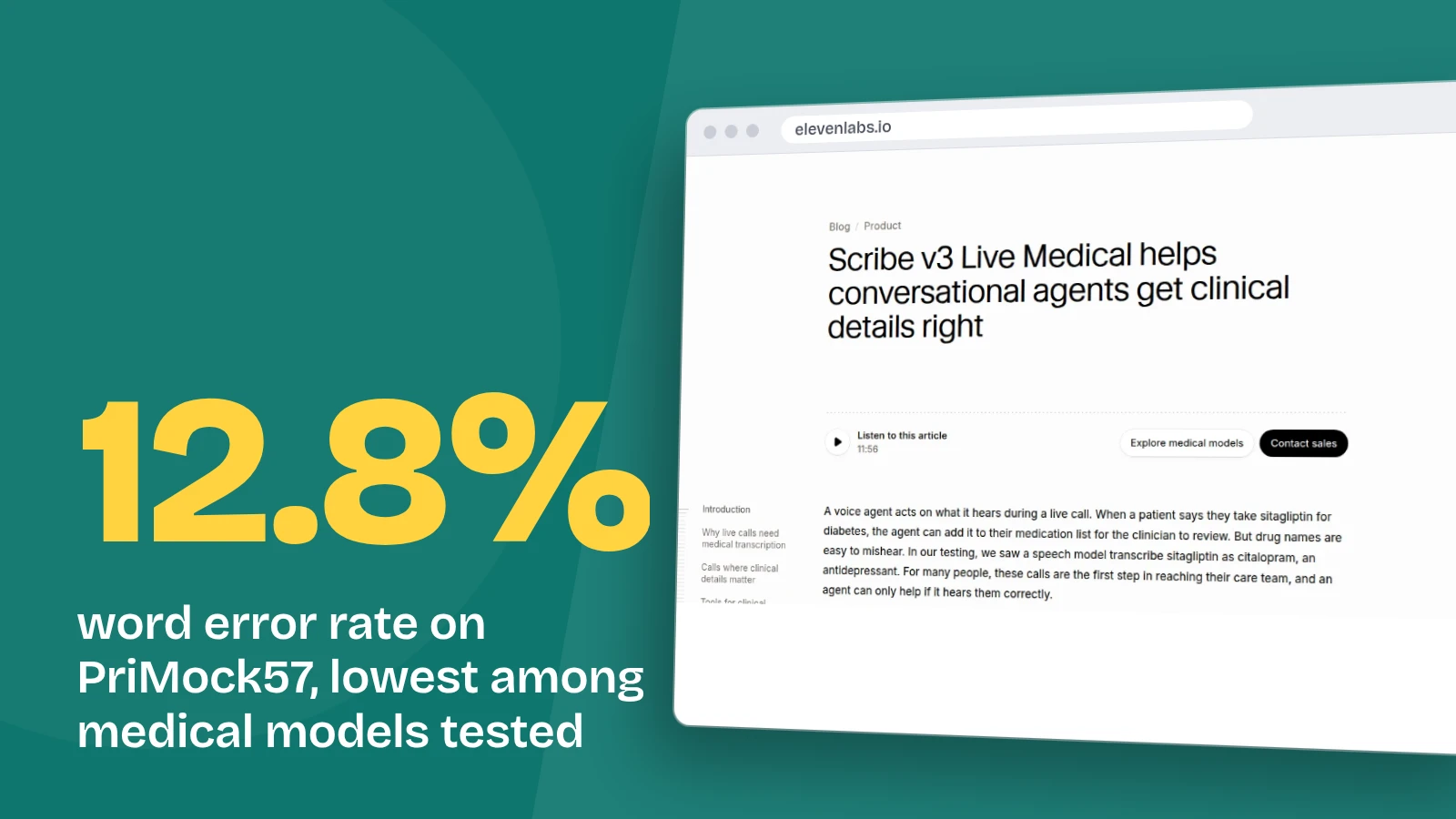
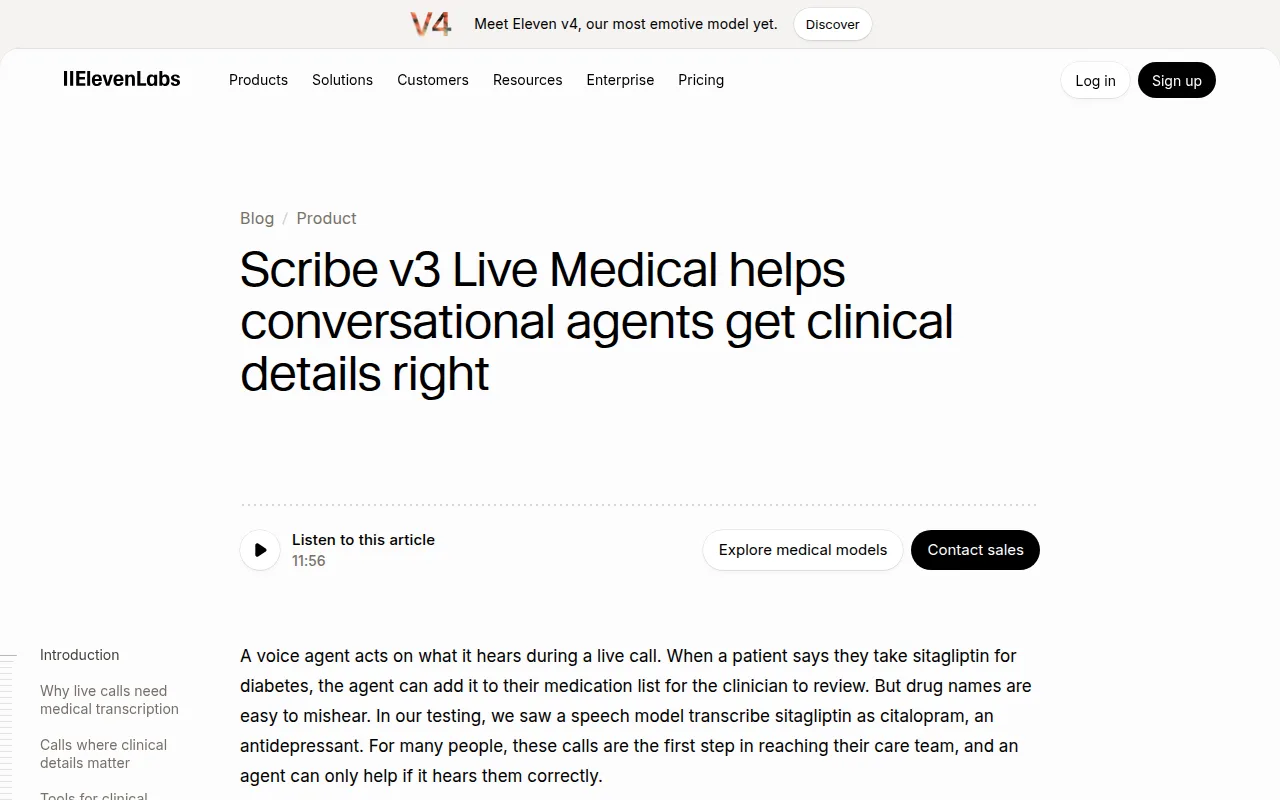
ElevenLabs has released Scribe v3 Live Medical, a real-time speech-to-text model that brings medical transcription to live calls (ElevenLabs). The company says that on PriMock57 the model reached a 12.8% word error rate, the lowest among the medical models it compared, and made 17% fewer errors than the closest competitor in that group. The figures come from the vendor’s own testing, so teams building healthcare voice agents should read them as company claims, not independent results.
What was released
ElevenLabs says Scribe v3 Live Medical builds on Scribe v3 Live, which it describes as its latest live speech-to-text model, and is tuned for the vocabulary of clinical conversation. The model is available in ElevenAgents. That placement points the release at developers who assemble conversational agents for health settings, where a transcript feeds whatever the agent says or records next.
On language coverage, the company says Scribe v3 Live Medical handles over 90 languages and keeps up when speakers change language during a call. Since ElevenLabs says patients and caregivers may switch languages mid-call, a model that follows those switches looks like a practical feature for agent builders.
Benchmark results
The headline comparison is on PriMock57, where Scribe v3 Live Medical recorded a 12.8% WER, the best figure among the medical models ElevenLabs tested. The company adds that this was 17% fewer errors than the model that came closest. A lower word error rate means fewer mistaken words per transcript, which matters most when a misheard drug name or dosage could change a clinical record.
ElevenLabs reports that, once a custom term list is loaded, Scribe v3 Live Medical made as much as 48% fewer mistakes on medical terms in its tests. On Eka Medical ASR, Scribe v3 Live Medical scored 11% semantic WER against 11.54% for Scribe v3 Live, which the company describes as 4.7% fewer errors.
The two results differ in size: the larger gain depends on a custom term list, while the Eka comparison against the general-purpose Scribe v3 Live is a smaller margin. A practitioner should therefore expect the biggest benefit when the deployment can supply its own vocabulary. Because each number comes from a different test setup, they are better read as separate indicators than as one combined accuracy score.
Latency
ElevenLabs says Scribe v3 Live transcribes speech in about 150 milliseconds. It adds that in testing, Scribe v3 Live Medical matches that latency.
If that holds in production, the medical tuning does not cost responsiveness, which matters for conversational agents. In a live call, a transcription delay shows up directly as a pause before the agent can respond, so matching the base model’s speed is a meaningful part of the pitch.
HIPAA eligibility and access limits
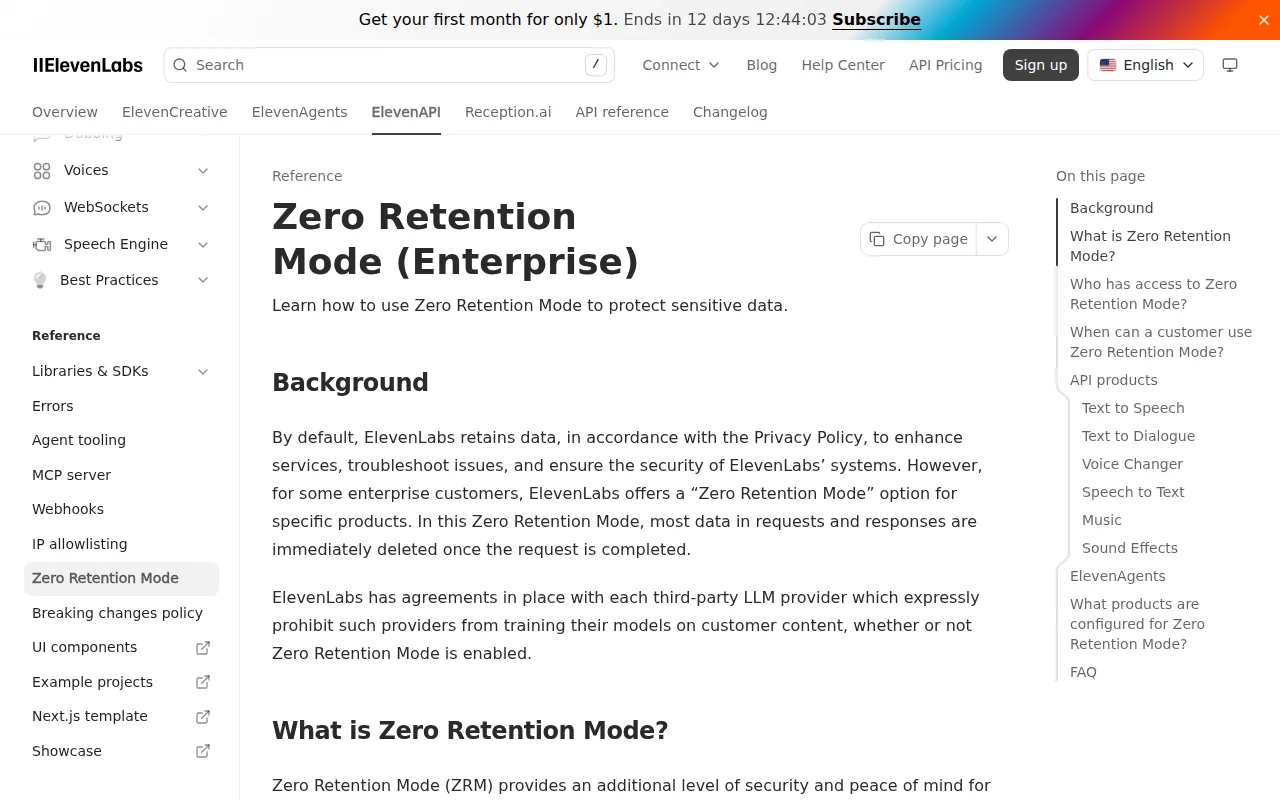
According to ElevenLabs, Scribe v3 Live Medical is HIPAA-eligible for enterprise customers who have a business associate agreement in place and Zero Retention Mode enabled. Zero Retention Mode itself is available to select enterprise customers (ElevenLabs). ElevenLabs says access to Zero Retention Mode may be restricted if it judges a customer’s use case high risk, if an automated system flags the account for additional moderation, or at its sole discretion.
Taken together, HIPAA-eligible use depends on an enterprise agreement and on a feature that is not open to every customer, so smaller teams should check eligibility before planning a deployment. The high-risk clause also means that even an enterprise buyer should confirm how its own use case would be classified.
What it means for builders
For teams building clinical voice agents, the release reads as a package of a medical-tuned live transcription model available in ElevenAgents and a HIPAA-eligible route that requires a business associate agreement and Zero Retention Mode for enterprise customers. The accuracy numbers are encouraging, but they were produced by the vendor, so a pilot on a team’s own recordings and terminology is the sensible way to confirm them. Because the biggest reported improvement relies on a custom term list, preparing that list early is likely to shape the results a team sees.
What the sources we read do not state
We check six facts on every story in the full text of each source. The pages listed under Sources do not state hardware requirements.
Sources
The sources this article was written from. Links open the original page.